
Shalider: The Complete Guide to Understanding Its Impact and Applications
Introduction
In today’s digital world, speed matters more than ever. Whether someone is browsing a website, shopping online, studying through an app, or managing business operations, users expect systems to respond quickly and intelligently. Traditional software systems often struggle to keep up because they rely on fixed rules and outdated processing methods. This is where Shalider enters the conversation.
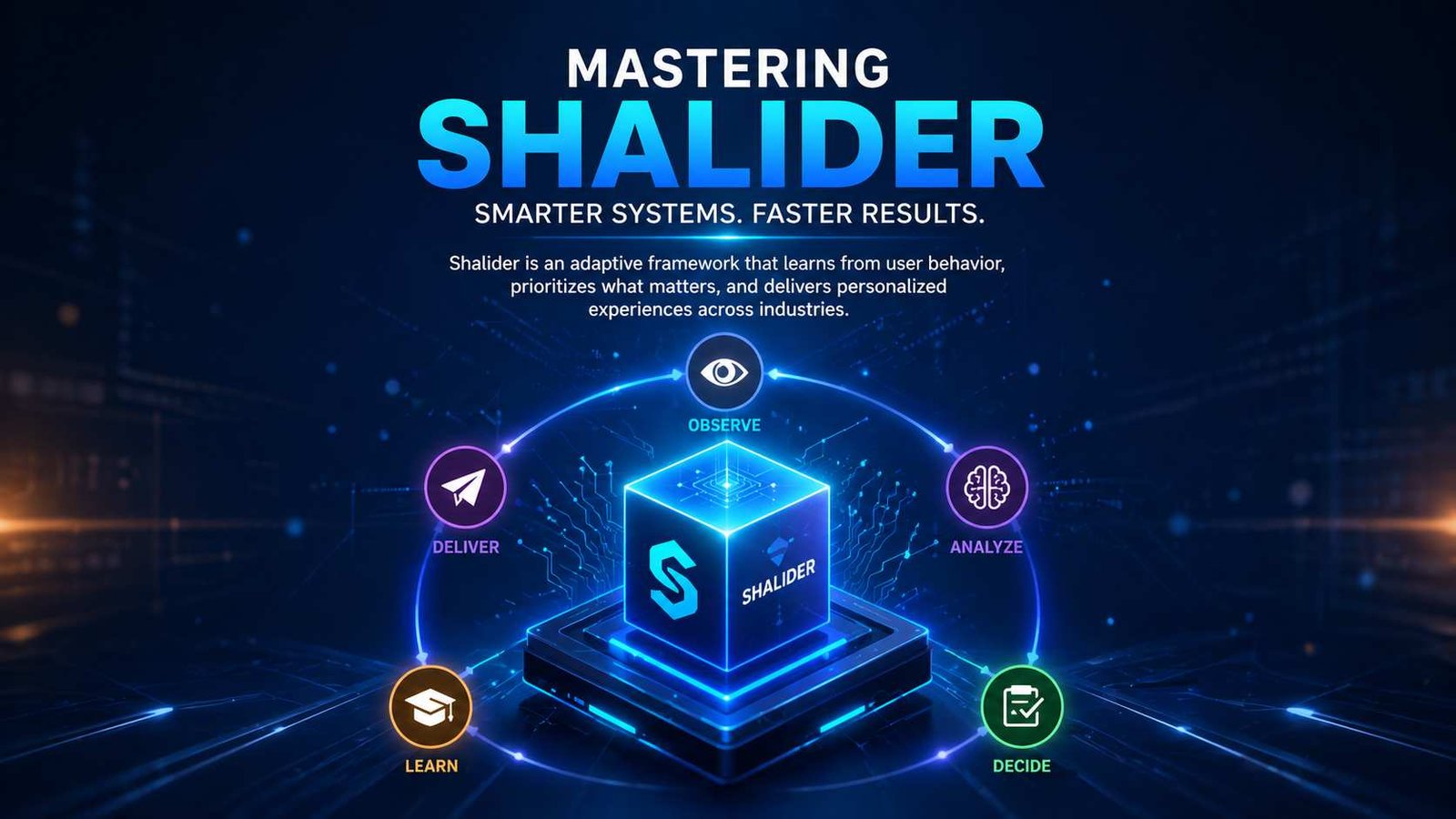
Shalider is an adaptive framework designed to improve how digital systems manage, organize, and deliver information. Instead of forcing users to search through endless layers of content, Shalider works proactively. It studies behavior patterns, predicts needs, and delivers faster, more personalized experiences. For businesses, this can mean better efficiency and higher user satisfaction. For everyday users, it means less frustration and more convenience.
As technology evolves, adaptive systems are becoming increasingly important. Understanding Shalider is not just useful for developers or businesses—it is valuable for anyone who interacts with modern digital platforms. This guide breaks down Shalider in simple terms, explaining how it works, where it can be used, and why it may play a major role in the future of technology.
What Exactly Is Shalider?
Shalider can be described as an intelligent adaptive management system that improves data organization and retrieval. Its primary purpose is to streamline information flow by learning user habits and prioritizing relevant data. Unlike traditional systems that simply react to commands, Shalider anticipates what users may need next.
Think of it like a highly organized assistant. Imagine entering a large library where instead of manually searching shelf by shelf, someone already understands your interests and instantly presents the most useful books. This is the core concept behind Shalider. It reduces wasted effort by narrowing down information based on behavior, context, and relevance.
What makes Shalider especially powerful is its ability to continuously learn. Over time, it becomes more efficient because it adapts to repeated behaviors and changing user needs. This flexibility creates smoother experiences across websites, applications, and digital infrastructures.
How Shalider Differs from Traditional Systems
Traditional digital systems typically operate in a straightforward, reactive way. A user enters a request, the system processes it, and then provides a response. While this works, it can often feel slow, especially when dealing with large amounts of information or complex user behavior.
Shalider introduces a more dynamic model. Instead of handling one request at a time, it evaluates multiple possibilities simultaneously. It focuses on three important priorities:
- What does the user need right now?
- What will they likely need next?
- What information is unnecessary?
By filtering data through these priorities, Shalider creates faster and more relevant outcomes. This predictive approach improves both efficiency and user satisfaction.
For example, on an e-commerce website, traditional systems may simply show product search results. Shalider, however, can analyze browsing history, purchase patterns, and hesitation signals to recommend more suitable products or promotions instantly. This makes the user experience feel smarter and more intuitive.
The Origins of Shalider
Shalider’s concept emerged from efforts to improve computing performance while minimizing lag and inefficiency. In the early 2010s, researchers and developers explored ways to reduce processing delays without sacrificing data accuracy. The goal was to build systems capable of balancing speed with intelligence.
Initial prototypes focused heavily on cloud computing and server optimization. Developers discovered that adaptive frameworks could reduce resource waste while improving information prioritization. Some systems showed notable reductions in memory consumption and operational inefficiencies.
The name Shalider is often associated with the combination of “shadow” and “slider.” This reflects how the framework operates quietly in the background while ensuring a smoother, more seamless front-end experience for users.
Though still an emerging term, Shalider represents broader trends in adaptive digital architecture and personalized system optimization.
How Shalider Works
Understanding Shalider does not require advanced technical knowledge. Its process can be simplified into four main stages.
Observation
Shalider begins by monitoring user interactions. This includes clicks, search habits, scrolling speed, pauses, and navigation choices. The goal is not surveillance but pattern recognition.
By understanding behavior trends, Shalider builds a clearer picture of user intent. For example, if someone repeatedly searches for educational content, the system can prioritize similar resources in future interactions.
Multi-Path Processing
Once user behavior is observed, Shalider processes multiple possibilities at once. Rather than following a single fixed path, it explores different response options simultaneously.
This parallel processing significantly improves response speed because the system is prepared for multiple outcomes rather than reacting after each step.
Decision Making
Shalider then selects the most suitable response based on context. If the user appears rushed, quick summaries may be prioritized. If they seem to be researching deeply, more comprehensive resources may be presented.
This flexibility helps create personalized experiences.
Continuous Learning
After delivering information, Shalider evaluates user reactions. Did the user engage? Ignore? Search again.
This feedback strengthens future predictions, making the framework smarter over time.
Real-World Applications of Shalider
For Websites and Content Platforms
Website owners constantly seek ways to improve engagement and reduce bounce rates. Shalider can automatically organize content, suggest related articles, and personalize user journeys.
For example, if a visitor reads multiple SEO-related blog posts, Shalider may prioritize similar articles, tutorials, or services. This increases page views, session duration, and overall user retention.
From an SEO perspective, improved engagement signals can indirectly support better search rankings
For E-Commerce Businesses
Online stores rely heavily on personalization. Shalider can analyze customer hesitation, browsing behavior, and purchase history to improve conversion rates.
For instance, if a shopper lingers on a product page without purchasing, the system might respond with:
- personalized discounts
- urgency notifications
- shipping incentives
This targeted adaptability can reduce abandoned carts and increase revenue.
For Educational Platforms
Every learner progresses differently. Shalider helps educational apps adjust materials based on student performance.
Students struggling with difficult concepts may receive:
- simpler explanations
- additional examples
- review exercises
Advanced learners can move faster with more challenging content. This customized learning environment supports better educational outcomes.
For Healthcare Systems
Medical professionals often deal with overwhelming volumes of patient data. Shalider can prioritize critical records, ensuring urgent details appear first.
For example:
- allergy warnings
- recent lab reports
- medication interactions
This streamlined data delivery improves speed and decision-making in high-pressure environments.
Key Benefits of Shalider
Improved User Experience
Modern users expect convenience. Shalider minimizes unnecessary searching, reduces delays, and personalizes interactions.
This creates smoother digital experiences that feel more responsive.
Reduced Operational Costs
By optimizing data flow, businesses may reduce hardware strain and server resource requirements.
Efficient systems can often do more with fewer resources.
Scalability
As data volumes increase, traditional systems may slow down. Shalider becomes more effective because it continuously refines prioritization.
This makes it highly scalable for growing businesses.
Privacy-Focused Adaptation
Many adaptive frameworks increasingly prioritize local-device learning, helping maintain personalization without excessive external data tracking.
This can improve user trust.
Common Misconceptions About Shalider
Shalider is Artificial Intelligence
Not exactly.
While Shalider may work alongside AI, it is better understood as a framework or system architecture. AI may generate decisions, but Shalider manages how information is prioritized and delivered.
Only Developers Can Benefit
False.
Most users interact with adaptive systems daily without understanding technical details. Shalider’s strength lies in invisibility it improves experiences without requiring specialized knowledge.
Shalider Replaces Human Decision-Making
Incorrect.
Shalider enhances access to information but does not replace critical thinking. Human users still control final decisions.
Applying Shalider Principles in Daily Life
Interestingly, Shalider’s logic can improve personal productivity.
By regularly asking:
- What is essential right now?
- What is coming next?
- What can be ignored?
people can better prioritize tasks and reduce overwhelm.
Daily review systems also mimic Shalider’s feedback loops. Reflecting on what worked and what failed can improve future efficiency.
This practical mindset makes Shalider valuable beyond technology.
Technical Structure: A Simple Breakdown
For those interested in technical architecture, Shalider typically includes four layers:
Collector Layer
Tracks user behavior and system interactions.
Tokenizer Layer
Breaks requests into smaller actionable units.
Mapper Layer
Matches priorities with relevant data sources.
Executor Layer
Delivers final outputs while collecting performance feedback.
Together, these layers create adaptive efficiency.
The Future of Shalider
Adaptive systems are expected to become more important as digital ecosystems grow increasingly complex.
Potential future developments include:
Voice Integration
Voice assistants may better interpret incomplete or unclear commands.
Hyper-Personalization
Digital experiences may become more context-sensitive while preserving privacy.
Enterprise Automation
Businesses may increasingly rely on adaptive frameworks for operations, customer service, and workflow management.
As users demand faster and smarter systems, frameworks like Shalider may become standard components of digital infrastructure.
FAQ’s
1: What exactly is Shalider in simple words?
Shalider is a smart system that learns from your behavior and shows you the right information faster.
2: Do I need technical skills to use Shalider?
No, anyone can benefit from Shalider without any coding or technical knowledge.
3: Is Shalider safe for my personal data?
Yes, Shalider can work locally on your device so your private data never leaves your phone or computer.
4: Can Shalider help my website rank on Google?
Yes, by improving user experience and keeping visitors on your site longer, Shalider indirectly helps Google rankings.
5: Is Shalider only for big companies?
No, small businesses and even individual users can benefit from it.
Conclusion
Shalider is not a complicated technology reserved for experts. It is a practical, intelligent framework that makes digital systems faster, smarter, and more user-friendly. In this article, we have explained what Shalider is, how it works, where it came from, and how it can benefit everyone from website owners to regular mobile users.
The best part is that you do not need to be a programmer to enjoy its advantages. Whether you are running an online store, managing a blog, or simply browsing the internet, systems built with Shalider save you time and reduce frustration. As technology continues to evolve, adaptive frameworks like Shalider will become the new normal. Understanding it today gives you a clear head start for tomorrow.